Myofascial Release · Sedona
Your pain has a pattern. I find it.
Slow, hands-on myofascial release that gets underneath whatever is guarding your pain. For the ache that comes back no matter how many times someone has pressed on it.
What fascia is
The web that holds the pattern
Fascia is the connective tissue that wraps every muscle, bone, nerve, and organ in one continuous web. When it's healthy it glides. After injury, surgery, repetitive strain, or years of bracing against stress, it tightens and binds, pulling on structures far from where you feel the pain.
That's why the sore spot keeps coming back. The muscle you keep treating is doing what the fascia around it demands. Until the restriction in the web is found and released, the body rebuilds the same pattern, every time.
How the work is done
Slow and sustained. No oil.
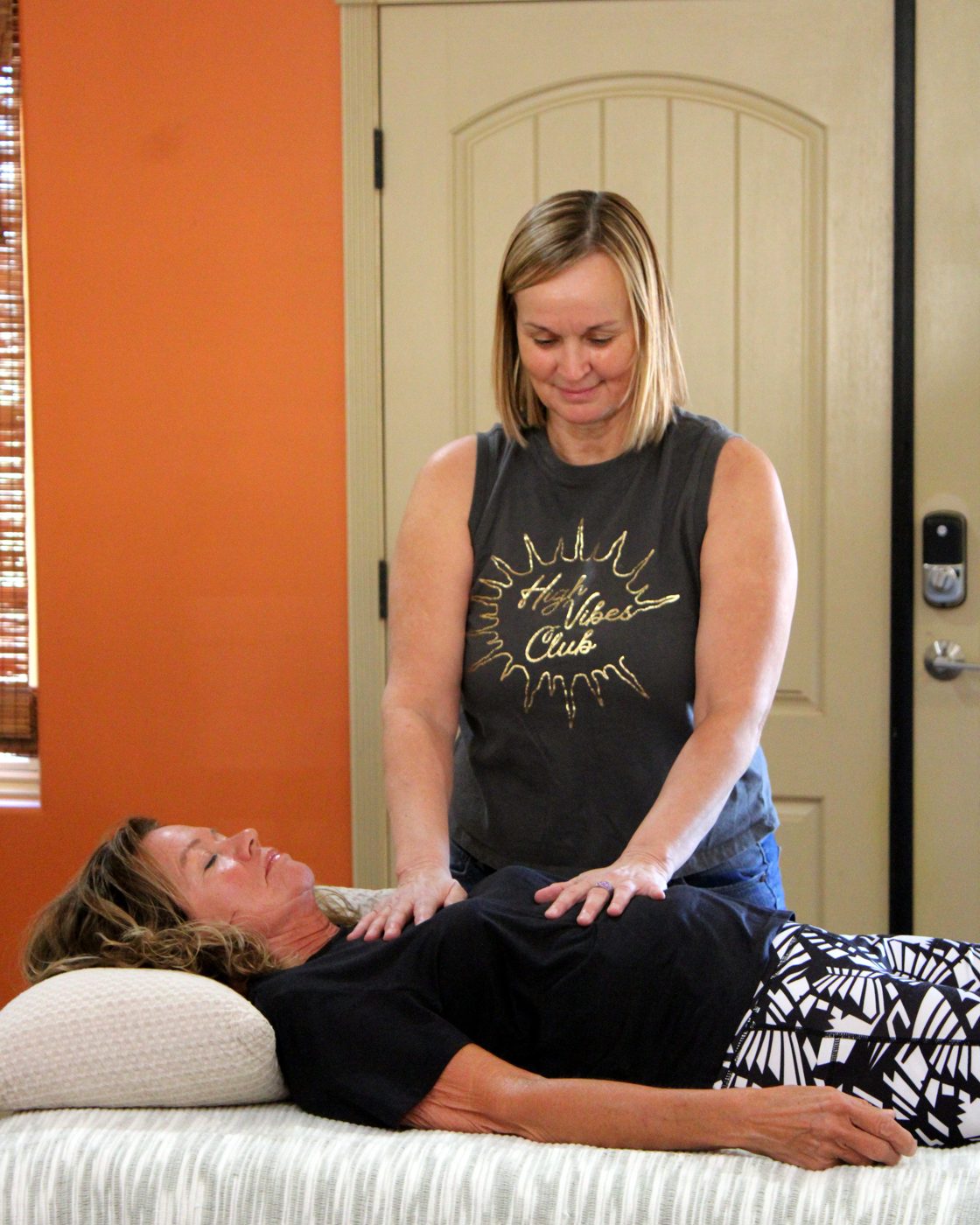
This is the John Barnes Approach. No oil, no lotion. Hands go on, sink in, and wait. Force doesn't work on fascia. It lets go under slow pressure that follows the tissue, and you can feel it soften and reorganize while it happens.
Sessions are 60 or 90 minutes, one-on-one, in a private room. Wear light, comfortable clothing: much of the work is done over clothes, and nothing heavy.
What people come in with
The patterns I see most
Neck, shoulders, migraines
Tension that lives up by the ears and sends headaches forward. Often rooted lower than the neck.
Low back and hips
The sitting body. Pain that flares with driving, standing at the counter, or getting out of bed.
After a fall or accident
The scan was clear and you still don't move right. Protective patterns that outlived the injury.
Post-surgical restriction
Scar tissue and guarding around a repaired joint or abdomen, including postpartum core recovery.
Knees, feet, IT band
Hiker's problems in a hiker's town. Frequently traced to the hip or the opposite side.
Whole-body tension
The body that never fully lets go. Stress patterns held in the fascia for years.
These reflect what clients have written in their own reviews and what walks through the door. They're not medical claims, and myofascial release is not a substitute for diagnosis or medical care.
Your first session
What a first session looks like
- Intake. Your history, what you've tried, what makes it better and worse. We talk it through, about ten minutes.
- A look at how you move. Standing, walking, turning. The pattern shows itself before hands go on.
- Treatment. Sustained myofascial release on the restrictions I find, which are often nowhere near where it hurts.
- Before you leave. What changed, what to do at home, and whether I think you need to come back.
Book 90 minutes for a first visit. The intake and the movement look take real time, and 90 leaves room for the hands-on work to go where the pattern actually lives. Once we know what we're working with, 60 is often enough for follow-ups.
Just want a massage?
Swedish, deep tissue, and hiker's recovery are here too.
Same table, same hands, oil instead of clothing. Not everything needs a pattern found. Studio massage →
Google reviews
What relief that stays sounds like
“This is by far the best massage I have ever had and what my body needed. Nicole's angel hands helped me release years of tension, stress and trauma. After the first massage I cried and my body felt safe to release trapped emotions! I will recommend her to everyone. Thank you Nicole”
“Nicole was amazing! She helped so much with my chronic pain and was such a safe and supportive therapist. I also went to her for postpartum recovery. I had a low belly pooch and diastase recti separation and she was able to narrow the separation and help my abs start working again after years of trying to do it on my own through exercise with minimal success. It was like getting a part of my body back that had been broken, shut off and shut down and feels so amazing I am still in shock when I feel the muscles finally working like they were meant to. I will definitely be a repeat customer! Thank you Nicole”
“Nicole, Quickly pin pointed my hip problem. She explained that that is a result of structural imbalance elsewhere. Ninety minutes later I walked out straighter stronger and with a better understanding of what I need to do going forward. Nicole's knowledge and professionalism is top notch.”
“I have had a great deal of bodywork done throughout my life. Nicole is by far the best practicioner I have ever met. She is able to call upon her vast reservoir of knowledge to make "hands on" adjustments to the body that result in the relief of of pain and promote wellness and balance throughout the entire body.”
“I highly recommend seeing Nicole for body work. She has helped heal my neck issues and relieved my migraines with her ability to locate the source of the problem. Also, post workout massages really improve my recovery time. My body has never felt better!”
“Nicole at Sedona Myofascial Release is exceptional. She intuitively knows exactly where and what to work on from head to toe, front and back. This is not a typical massage — it's thoughtful, highly skilled bodywork that actually creates change. I left feeling rejuvenated, lighter, and more aligned than I have in a long time. Her space is calm and comfortable, located conveniently near Bell Rock, which makes the whole experience even better. I truly wish I lived closer so I could make this a monthly practice. Book the 90-minute session and you'll know your money was well spent.”
One session tells you a lot.
Your body will know by the end of it whether this is the right work. Book online, or text first.